
Inclusive Training Programs
Providing specialized coaching for blind and visually impaired athletes.
Goalball Federation of India Learn More


Official updates from the Goalball Federation of India.
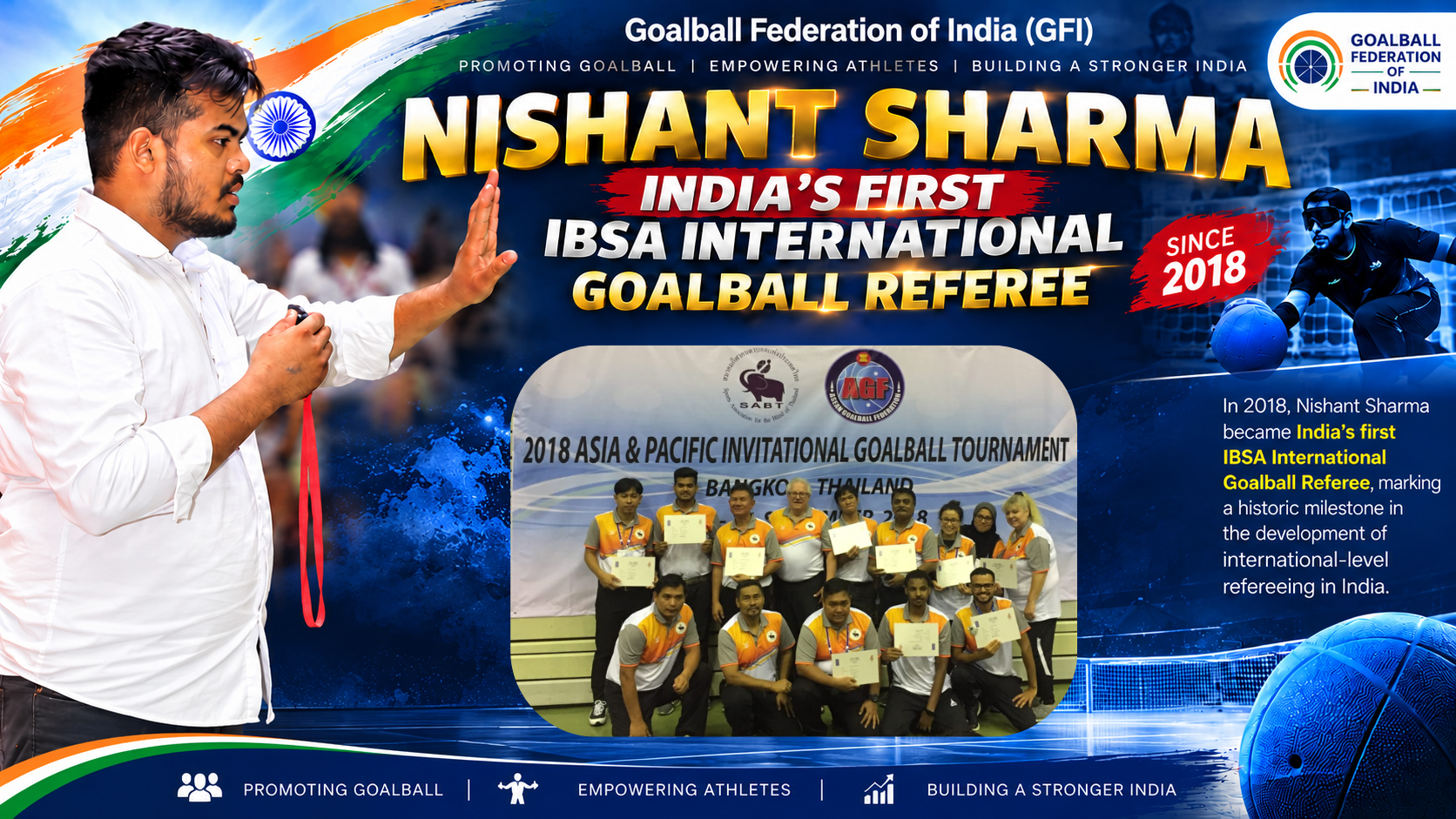
A historic milestone for Indian Goalball! Nishant Sharma became India’s first IBSA International Goalball Referee in 2018, marking an impor…
Read moreAt GFI, we conduct nationwide training programs, tournaments, and competitions to support the development of Goalball in India. Our coaching staff provides world-class training to help athletes improve their skills and compete at higher levels.
A Paralympic sport for visually impaired athletes, played with a ball embedded with bells.
Goalball competitions include men's and women's events in the Paralympic Games.
All players wear blackout masks to ensure equal vision limitations during play.
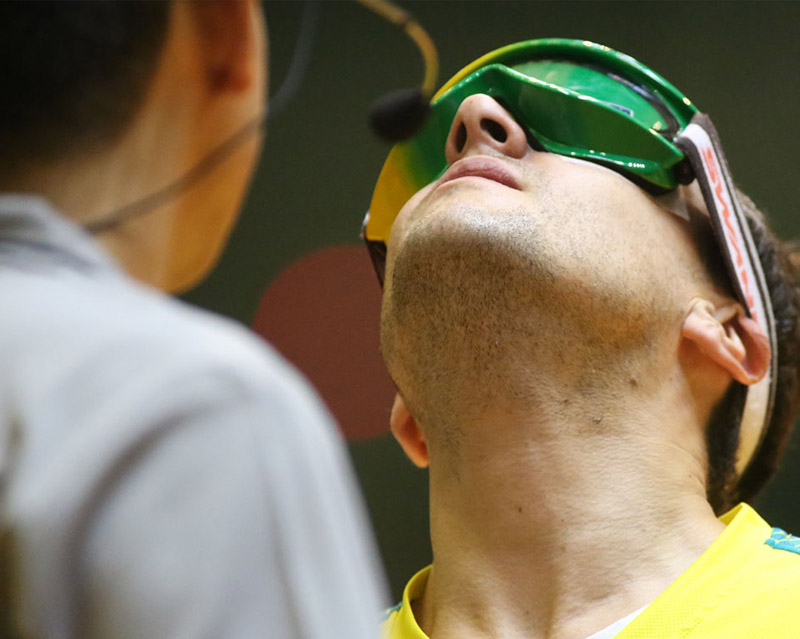
Goalball is a Paralympic sport that requires athletes to undergo a classification process to ensure fair competition. Classification assesses a player's visual impairment and ability to compete within the sport’s regulations.
Step 1: Eligibility Assessment – Athletes must undergo tests to confirm they have an eligible impairment that meets the minimum criteria for goalball.
Step 2: Sport Class Assignment – Once eligibility is confirmed, players are assigned a sport class based on test results and medical documentation submitted to classifiers.

Athletes participating in Goalball and other GFI sports must undergo a classification process to ensure fair competition. Classification assesses an athlete's impairment and ability, determining their eligibility to compete.
The first stage involves a series of tests to verify whether a player has an ‘eligible impairment’. This ensures that their disability meets the minimum requirements to affect their ability to play Goalball.
The next step is assigning a ‘sport class’ based on medical evidence and test results submitted to classifiers.
Goalball is a team sport specifically designed for athletes with visual impairments and has been a part of the Paralympic Games since 1976.
The court measures 18m x 9m, with tactile markings for navigation.
Goals span the entire 9m width of the court and stand 1.3m high.
The ball weighs 1.25kg, has a 76cm circumference, and contains noise bells.
Players wear team uniforms with numbers displayed on the front and back.
In goalball, the sport classes are B1, B2, or B3. B1 and B2 players have the most severe impairments.
All athletes compete together on the same team but must wear eyeshades. This ensures a level-playing field for all team members.
GFI Goalball is conducting research to create a classification system specific to goalball. This is a requirement for being part of the Paralympic programme.
More information about classification, how it works, and what athletes can expect from the current process can be found below:
More on Classification
